

In healthcare, the quality of care isn’t the only thing patients remember.
It begins at the entrance, continues through reception, and builds in the waiting room—long before a patient ever sees a provider.
These early interactions may seem small, but they influence how patients perceive care, how much they trust their providers, and whether they return.
For healthcare providers, these moments impact retention and referrals. For landlords and investors, they directly affect tenant performance and long-term asset value.
The Environment Sets Expectations
Before a patient speaks to anyone, the space communicates on behalf of the practice.
Patients notice:
- Cleanliness and organization
- Lighting and air quality
- Noise levels
- Ease of navigation
These signals shape perception immediately.
In medical real estate, the condition of the space is a direct reflection of the level of care patients can expect to receive. This is why the right environment can make or break your reputation.
The Reception Area Is a Critical Touchpoint
The reception area is more than a checkpoint. It is the operational and emotional center of the practice.
Effective reception design balances:
- Functionality: Organized workspace and efficient workflows
- Ergonomics: Comfortable setups that support staff performance
- Privacy: Separation between check-in and waiting areas
- Atmosphere: Bright, calm, and welcoming
Clear organization also reduces cognitive load for patients
When the check-in process feels intuitive and structured, patients spend less time figuring out where to go and more time feeling confident they are in the right place. That clarity sets the tone for the entire visit.
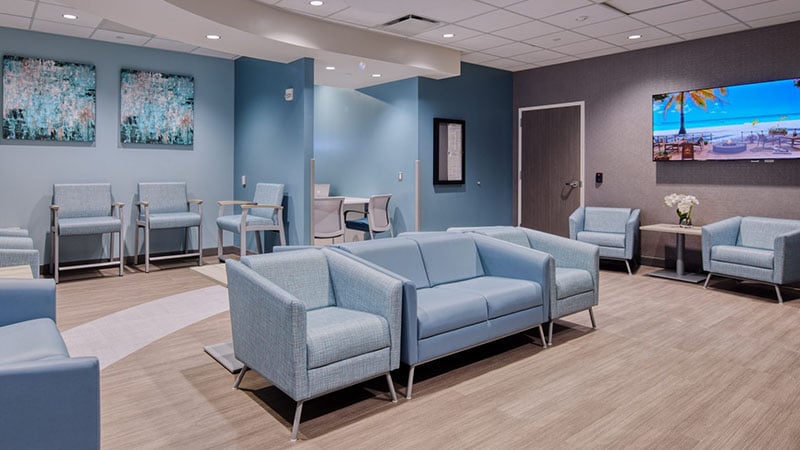
Waiting Should Feel Intentional, Not Inevitable
Waiting is often unavoidable in healthcare, but how it feels is controllable. A well-designed waiting area can reduce perceived wait times and patient anxiety.
Key elements include:
- Comfortable, durable seating: Supports patients of all ages and conditions. Poor seating can create discomfort that patients associate with the overall visit.
- Natural or warm lighting: Helps reduce stress and creates a more welcoming environment.
- Calming color palettes instead of overly clinical tones: Warmer tones and balanced contrast can make the space feel more approachable, while overly sterile environments can increase anxiety and discomfort.
- Access to reading materials or light distractions: Gives patients a sense of control over their time and helps redirect focus away from stress, uncertainty, or perceived delays.
- Indoor plants or natural elements: Introduce a sense of calm and softness to the space, helping improve the overall atmosphere.
When patients feel uncomfortable or uncertain, time feels longer. A calm, well-structured environment makes the same wait feel more controlled.
Small Interactions Build Trust
Design sets the stage, but people reinforce the experience.Patients remember how they are treated just as much as how the space feels. Trust is built through consistent actions:
- Greeting patients by name
- Maintaining eye contact and open body language
- Listening to understand, not just respond
- Explaining information clearly without heavy jargon
- Acknowledging concerns and showing empathy
These behaviors signal respect and attentiveness. Consistency is what patients remember. Over time, those experiences build trust and turn one-time visits into long-term relationships.
Reducing Friction Improves Retention
Patient experience is often defined by how easy the process feels. Friction appears in subtle ways:
- Confusing layouts or unclear signage
- Overcrowded waiting areas
- Lack of privacy at check-in
- Inefficient workflows that delay appointments
These issues may seem minor, but they accumulate. Thoughtful design can eliminate many of these challenges:
- Clear wayfinding throughout the space
- Defined zones for reception, waiting, and treatment
- Logical patient flow that minimizes congestion
- Acoustic considerations to protect privacy
Consistency Reinforces Confidence
Patients do not expect perfection. They expect consistency.Inconsistent experiences can quickly erode trust. Consistency applies to:
- Daily maintenance and cleanliness
- Staff interactions and tone
- Workflow and wait time expectations
- Overall look and feel of the space
Unclear maintenance responsibilities or deferred upkeep can create operational disruptions that patients feel first. For both providers and landlords, maintaining consistent standards protects long-term performance.
Design as a Strategic Advantage
In a competitive healthcare landscape, patient experience is a key differentiator. Small experiential details influence:
- Patient loyalty
- Online reviews
- Referral patterns
- Overall growth
They also influence tenant performance and how a property is perceived in the market.
A well-designed, well-maintained medical space supports stronger retention, more efficient operations, higher tenant satisfaction, and greater long-term asset stability.
Aligning Space with Growth
As practices expand, maintaining a consistent experience becomes more complex. Growth without proper infrastructure can lead to overcrowding, strained workflows, and inconsistent patient experiences.
This is where strategy becomes critical. Flexibility, scalability, and location all influence how effectively a practice can grow while maintaining its standards.
Conclusion
In healthcare, patient experience is built through consistent, everyday interactions between people, process, and place.
When those elements are aligned, retention improves, operations run more efficiently, and long-term value becomes more predictable.
At Gittleson Zuppas Papantoniou Medical Realty, we help healthcare providers and property owners align real estate decisions with patient experience, operational efficiency, and long-term performance. Let’s talk.