

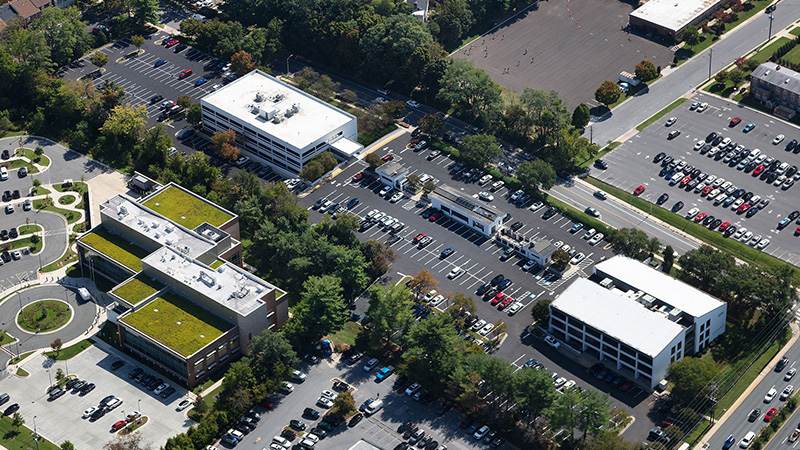
In retail, parking is important. In medical real estate, it’s critical.
For patients, staff, and visitors, parking isn’t just a convenience—it’s part of the care experience. Whether it’s high-volume urgent care or a specialist’s office with longer appointments, the ability to easily access a medical building can make or break a patient’s perception, their practice loyalty, and the tenants overall performance.
For landlords, that makes parking more than an amenity. It’s a strategic asset that directly impacts leasing, tenant satisfaction, and long-term property value.
Why Parking Matters in Medical Real Estate
Medical visits aren’t like other appointments. They can be urgent, emotionally charged, or physically challenging. Patients often arrive with mobility needs, family members in tow, or under time pressure. If parking is limited, hard to find, or inconveniently located, the entire experience suffers, and that can lead tenants to reconsider their lease.
Different tenants also have different parking demands:
- High-turnover clinics like urgent care, imaging centers, dental offices, and primary care may have multiple patients arriving and leaving every 15–30 minutes. These tenants need higher parking turnover and more available spaces to maintain operational flow.
- Low-frequency specialists like surgeons, oncologists, and allergy clinics may see fewer patients per day, but each appointment can last an hour or more. They require parking availability for longer durations.
In both cases, parking is essential to smooth operations, patient satisfaction, and revenue. For landlords, that means more spaces can mean more income.
The Business Case for Landlords
Ignoring parking in your property strategy can cost you—literally. Parking isn’t just asphalt; it’s part of your property’s income strategy.
Here’s why landlords need to make parking a priority:
- Attracting high-value tenants: Properties with ample parking appeal to urgent care centers, multi-specialty practices, and other high-demand tenants that rely on constant patient flow.
- Reducing tenant turnover: One of the top reasons tenants relocate is inadequate parking for patients or staff. Losing a tenant means lost rent, vacancy downtime, and re-leasing costs.
- Supporting tenant revenue: More available spaces = more patients seen = higher revenue for tenants, which supports stronger rent-paying capacity.
- Increasing property value: Medical properties with accessible, plentiful, and well-designed parking are more attractive to investors and appraisers.
Gittleson Zuppas Medical Realty Parking Portfolio
At Gittleson Zuppas, we’ve seen firsthand how the right parking setup can make a property more competitive and valuable. Well-planned parking doesn’t just support tenants—it can be a defining factor in attracting them in the first place.
Here are three standout examples from our portfolio:
Located in Columbia, MD, this The convenience supports multi-specialty tenants with steady patient flow throughout the day.
Medical Pavilion I & II at National Harbor
Featuring structured parking with direct building access, these twin pavilions cater to a mix of high-turnover clinics and specialist offices, accommodating varied parking demands without compromising patient access.
This well-positioned property offers ground-level parking for both patients and staff, helping to minimize appointment delays and increase patient satisfaction.
Parking Design and Planning Considerations for Landlords
More spaces alone aren’t enough. and positions your property for evolving market needs.
Landlords and tenants should consider:
- ADA compliance: Accessible spaces and pathways are a legal requirement and a key part of patient experience.
- Clear directions: Signage, marked entrances, and visible patient drop-off zones make navigation easier.
- Balanced allocation: Assign spaces proportionally based on each tenant’s traffic volume to prevent shortages.
- Future-proofing: Plan for emerging needs, such as EV charging stations or covered parking to protect patients from weather.
Why Tenants Leave Over Parking — And How to Prevent It
Even the best location and build-out can’t overcome a parking shortage. We’ve seen otherwise strong properties lose tenants because patients complained about parking, staff struggled to find spaces, or appointment schedules were disrupted.
Landlords who treat parking as a top-tier leasing factor, alongside rent, location, and build-out, can prevent high-cost tenant churn.
Parking is a Tool
In medical real estate, parking is more than a lot: it’s a leasing tool, a retention strategy, and a driver of asset value.
Properties with well-designed, abundant parking attract higher-quality tenants, support stronger revenue streams, and command greater interest from investors. For landlords, that means thinking about parking from day one, not as an afterthought, but as a core part of your asset strategy.
If you’re evaluating your medical property’s leasing potential, Gittleson Zuppas Medical Realty can help you align every detail—including parking—to meet the needs of today’s healthcare tenants and tomorrow’s market.