

The start of the year is when many healthcare organizations reassess growth plans, new services, new locations, and new patient populations.
For landlords, investors, and healthcare operators, this is also a strategic moment. Aligning clients with emerging medical hotspots early can shape leasing performance, tenant stability, and asset value long before demand peaks.
Medical hotspots don’t appear overnight. They form where population growth, accessibility, health specialties, outpatient care models, and real estate readiness intersect. Recognizing those signals early allows clients to secure space, design intelligently, and grow with the market instead of chasing it.
What Defines an Emerging Medical Hotspot
Not every growing market becomes a healthcare destination. The strongest medical hubs share a consistent set of fundamentals:
- Dense and aging populations with reliable insurance coverage
- Strong commuter flow and transit accessibility
- Proximity to residential areas
- Zoning that supports outpatient medical use
- Buildings capable of handling healthcare infrastructure
When these elements align, healthcare providers follow, and real estate demand accelerates quickly. Practices benefit from visibility and access, while property owners gain stable, long-term tenants anchored to patient populations.
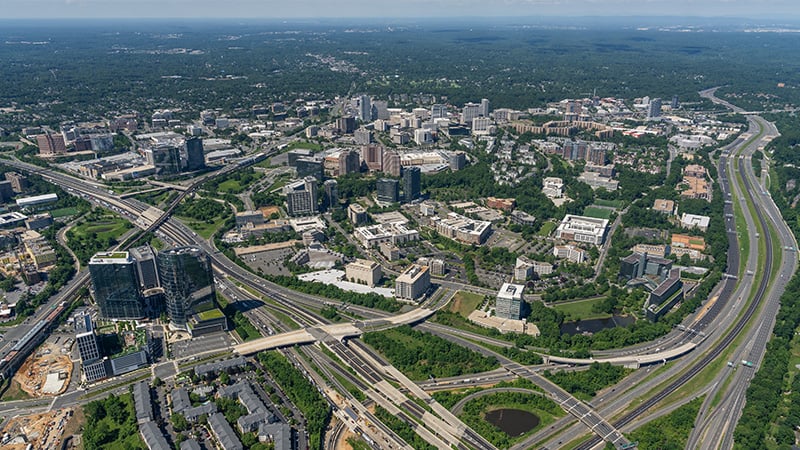
Why Tysons Corner Is Emerging as a Healthcare Hub
When it comes to medical hotspots, Tysons has quickly become one of Northern Virginia’s most concentrated outpatient healthcare hubs, reflecting the broader shift away from centralized hospital campuses toward accessible, community-based care. Today, the area supports a dense mix of primary care, diagnostics, urgent care, and specialty services in highly visible, transit-accessible locations.
VHC Health’s Tysons Pavilion anchors the market with primary care, advanced imaging, cardiovascular diagnostics, and specialty services. Complemented by concierge, pediatric, and behavioral health providers, Tysons clearly signals sustained demand for medical-ready real estate that supports integrated, outpatient-first care.
Why Timing Matters in Emerging Medical Markets
Healthcare demand in emerging hubs has accelerated quickly. Once a market reaches its critical mass, space becomes scarce, rents rise, and flexibility declines.
Early alignment allows practices to:
- Secure better locations
- Negotiate favorable lease terms
- Customize layouts for long-term use
- Establish patient loyalty before competition intensifies
Late entry forces lease holders to compromise, accepting suboptimal layouts, limited parking, or higher operating costs.
What This Means for Landlords and Investors
Emerging medical hubs present a clear opportunity for property owners willing to plan ahead.
Healthcare tenants in growth markets tend to:
- Sign longer lease terms
- Invest heavily in specialized build-outs
- Generate predictable occupancy
- Remain anchored to local patient bases
As outpatient care continues to expand, properties that support medical use are increasingly insulated from broader market volatility. Owners managing portfolios across multiple locations should consider how these hubs fit into a broader leasing strategy.
Patient Experience Is Driving Location Decisions
Today’s patients value convenience as much as clinical quality. Access, layout, lighting, air quality, and intuitive navigation all influence where patients choose to receive care and whether they return.
This is especially true in dense markets like Tysons, where patients have options. Practices that align real estate decisions with patient experience are better positioned to compete.
Where Gittleson Zuppas Papantoniou Properties Fit into This Growth
This shift toward outpatient, integrated care is reflected across the Gittleson Zuppas Papantoniou portfolio in real-time. GZP represents medical properties throughout the Mid-Atlantic that are purpose-positioned for modern healthcare delivery, offering strong visibility, convenient parking, and layouts that support diagnostics, urgent care, and specialty services.
Spaces like Doctors Medical Park and Medical Pavilion I & II at National Harbor illustrate how well-located, medical-ready properties can support the same outpatient-first model emerging in Tysons. These properties demonstrate what healthcare providers increasingly seek: access, flexibility, and the ability to deliver multiple services within a single, patient-friendly location.
Preparing Clients for Growth in 2026 and Beyond
Healthcare delivery will continue moving closer to where people live and work. Emerging hubs like Tysons illustrate how outpatient care, diagnostics, urgent services, and specialty practices are increasingly delivered within integrated, accessible environments.
Aligning clients with these markets requires more than site selection. It requires understanding operational needs, growth trajectories, and long-term real estate performance.
For broader regional context on healthcare demand in the Mid-Atlantic, see
Why Maryland’s Healthcare Market is Ideal for Your Practice.
Recognize Where Healthcare Demand is Forming
Kicking off the year strong isn’t about chasing trends, it’s about recognizing where healthcare demand is forming.
Markets like Tysons are emerging as healthcare hubs because they support how care is delivered today: outpatient, accessible, and patient-centered. For landlords, investors, and healthcare operators, aligning with these markets early creates long-term value.
Gittleson Zuppas Papantoniou helps clients anticipate where healthcare is headed and position real estate to support sustainable growth, performance, and resilience.